
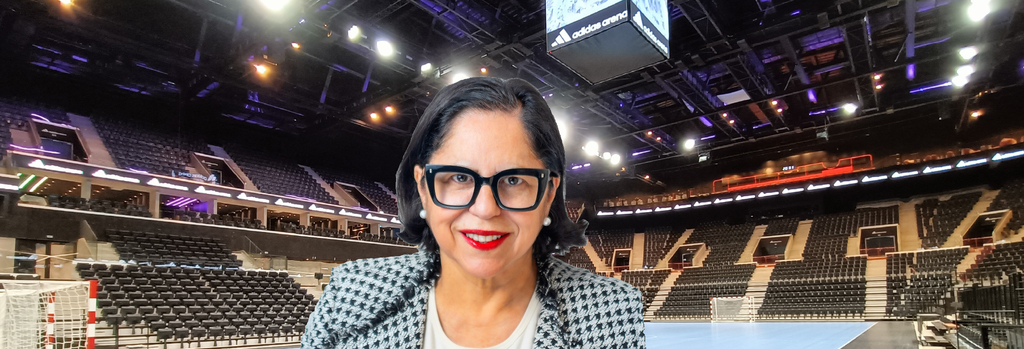
Rethinking arena seating: Maria Fernandes on flexibility and enhancing experience
As multi-use arenas face ever-changing demands from operators, presenters, and audiences, flexible seating solutions are becoming essential to remain competitive. Maria Fernandes, Market Development Specialist at MASTER Industrie, will explore these challenges and opportunities at the Arenas Operators and Developers World Summit.
In her presentation, Beyond Multiuse Arenas: Transforming Seating Layouts to Accommodate the Everchanging Demands of Owners, Operators, Presenters, and Audiences, scheduled for Wednesday 11 February, Fernandes will share practical insights on how innovative seating systems can drive revenue, improve fan experiences, and future-proof venues.
What are the biggest limitations of traditional arena seating models?
“There are a few new challenges driven in part by the physical integration of ever-changing technological solutions as well as the desire to attract more diverse programming. In both cases, this constant need to transform the seating map while ensuring the best sightline views is essential in a competitive arena venue world.”
From your work at MASTER Industrie, what trends are you seeing in how venue owners and operators are using seating to increase flexibility and revenue?
“There are several solutions available in the marketplace that help increase flexibility. The key is to offer the most expansive possibilities in modularity, portability, and storability. The speed in which these operations take place directly affects the bottom line in a positive manner. On the revenue side, offering quickly adaptable solutions allows for transformation in an arena at an increased rate, directly impacting new revenue opportunities.”
How can transforming seating layouts help arenas adapt more quickly to the ever-changing demands of multi-use venues?
“Choosing portable or telescopic seating systems for the lower or main tier area is an approach already applied at many venues. Some significant considerations in future planning include evaluating manpower costs, the ease of operation, modularity of the system, how easily the stacks join, how much storage space is available, whether the stacks store within the arena or move to alternate storage areas, and what type of equipment is readily available to handle the moving parts.”
Audience expectations are evolving rapidly. How does seating design play a role in enhancing the fan and guest experience?
“The most direct impact is two-fold: improving sightlines regardless of event type and offering comfortable seating options while allowing for newly introduced lighting options tailored to the performance. Integrating these enhancements can elevate the audience experience.”
What are the key considerations operators should keep in mind when investing in flexible seating solutions to future-proof their venues?
“It is clear that short-term costs need to be weighed against an in-depth cost-benefit analysis. At MASTER Industrie, we calculate change time to support operators’ efforts in planning and decision-making.”
What practical insights or real-world examples can attendees expect to take away from your session at the Arenas Operators and Developers World Summit?
“I will be juxtaposing case studies that feature an advanced approach to transformation needs alongside one that, in size and scope, demonstrates a more conventional approach.”
Is there anything else you would like to add?
“If owners and operators’ goals include maximizing their venue efficiencies, executing a deep dive review of audience seating providers that specifically match their venue needs will certainly aid in achieving positive results.”
The Arenas Operators and Developers World Summit will be hosted at the NEC in Birmingham, UK, from 10-11 February 2026. Book your delegate pass today by clicking here.