
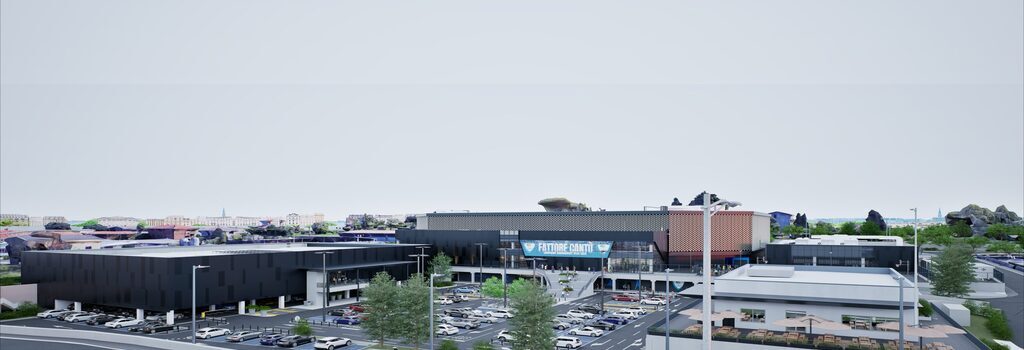
Cantù Arena: A new blueprint for venue development in Italy
As Italy’s first arena developed under the country’s Stadium Law, Cantù Arena represents a significant shift in how modern venues can be planned, funded and operated. Located between Lake Como and Milan, the €40m project combines public and private investment to deliver a highly flexible, technology-driven arena designed to serve sport, entertainment and the wider community.
Ahead of his appearance at the Arenas Operators and Developers World Summit in Birmingham on 11 February, Andrea Mauri, CEO of Cantù Arena, shares insight into what makes the project a true “3.0 arena”. From digital fan engagement and sustainability to mixed-use commercial strategy and lessons drawn from global best-in-class venues, Mauri explains how Cantù Arena aims to become both a community hub and a scalable model for future arena development across Italy and beyond.
 Cantù Arena is described as Italy’s first “3.0 arena” and the first developed under the Stadium Law. What does that mean in practical terms?
“Cantù Arena is the first venue in Italy built under the Stadium Law, which allows stadiums and arenas to be built or redeveloped through a shorter bureaucratic process. The venue is funded through project financing, where collaboration between the public and private sectors was key to its success. This development can serve as a case study to be replicated on a larger scale in Italy and represents an attractive opportunity for investors.
“The concept of a 3.0 arena reflects our ambition to deliver infrastructure that is “smart, smaller and social” – a venue that can be active 360 degrees thanks to its structural flexibility and entertainment technology. Cantù Arena is also the first arena in Italy to introduce a Personal Seat License (PSL).”
From your perspective, what makes Cantù Arena stand out among Europe’s new generation of venues?
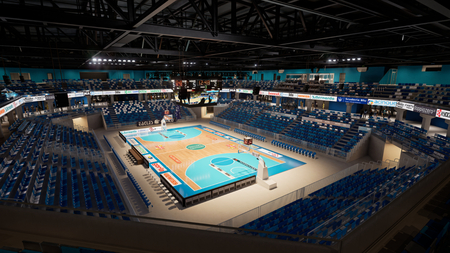
“Cantù Arena is a perfect example of a modern, compact venue that has everything needed to host a wide range of events: sport – including a resident club, Pallacanestro Cantù – concerts, fairs, conventions, business meetings, as well as a pavilion and an outdoor event plaza.
“The arena also includes restaurants, co-working spaces and a retail store. The structure has been designed to address the full experience for both fans and corporate clients, with a strong focus on customer experience. At the moment, there is no other venue of this size with these characteristics in Italy.”
How has Cantù Arena been designed to rethink the way fans engage with sport, entertainment and the surrounding district?
“There are several touchpoints designed to engage audiences, starting with modern technologies that enhance fan interaction, such as customised news, a dedicated app, reward programmes and gamification. These tools help keep spectators informed and engaged, while entertainment initiatives also support off-site activities that promote the arena throughout the local area.
“The goal is to encourage people to return to the arena because they enjoyed an unforgettable experience that goes beyond the event itself.”
What sustainability principles have guided the planning of Cantù Arena?
“Sustainability is a core theme for Cantù Arena, embracing environmental, economic and social aspects. From the previous structure, we reused parts of the existing materials, including incorporating old sediments into the concrete of the basement and recycling iron components.
“The project prioritises environmentally friendly materials and renewable energy solutions such as solar and photovoltaic panels, electric car charging stations and low-consumption lighting.
“From an economic perspective, the €40m investment is supported by a long-term financial plan based on hosting more than 80 events per year, alongside revenue from restaurants, concessions, co-working spaces and rentable business areas. This directly links to social sustainability, positioning the arena as a reference point for the community and the wider territory.”
Which technological innovations are you most excited about implementing at Cantù Arena?
“There is a strong focus on 5G and IoT infrastructure, allowing guests to interact more closely with the venue, events, artists and the resident basketball team, Pallacanestro Cantù. This helps deliver a safer, more personalised and engaging experience. We are also implementing cashless services to provide faster transactions and reduce queue times for spectators.”
 With your role on the board of Pallacanestro Cantù, how has working closely with a historic basketball club shaped the design and commercial strategy of the arena?
“We are building this venue to “give a home” to the “Queen of Europe”, as Pallacanestro Cantù is known, and to meet the standards the club deserves. Initially, the idea was simply to build an arena and training facility in one location within the city of Cantù.
“However, considering the scale of the investment, we decided to create a mixed-use facility capable of hosting multiple activities. Today, the commercial strategy of both Cantù Arena and Pallacanestro Cantù focuses on identifying partners that align with both brands, ensuring harmony across the business ecosystem. The arena has been a key driver in transforming the club from a local sports organisation into a more structured business with new revenue streams.”
What lessons from global arena projects have most influenced your approach to Cantù Arena?
“ASM Global, now Legends Global, supported us during the consulting phase, bringing its expertise to help design an arena that is flexible for multiple uses and includes a strong food and beverage offering to enhance the guest experience and encourage daily activation. From a structural perspective, some elements of Cantù Arena share similarities with venues such as Crypto.com Arena in Los Angeles.”
Finally, for operators, developers and investors attending the Arenas Operators and Developers World Summit, what key takeaway do you hope they gain from your session?
“The session is a great opportunity to explore one of Italy’s most innovative arena projects and to demonstrate that the country is an attractive place to invest in developing and upgrading venues that are currently obsolete. “In our case, the arena has acted as an accelerator of innovation for the sports club, and we hope this new generation of venues can support sports organisations and their communities in a similar way.”
The Arenas Operators and Developers World Summit will be hosted at the NEC in Birmingham, UK, from 10-11 February 2026. Book your delegate pass today by clicking here.